 Since 1977
FAQ
What is an RV?
There are eight generally accepted categories of recreational vehicle. We carry six of them, and they are all below with a photo and a plain description of what the thing actually is.
"RV" is shorthand for a whole family of vehicles that combine transportation with living quarters. At one end you have a simple place to sleep and eat. At the other you have separate bedrooms, a full kitchen, a bathroom with a shower or a tub, washer and dryer hookups, central heat and air conditioning, and slide-out sections that widen the living area once you are parked and levelled.
Everything splits into two groups. Towable RVs are pulled or carried by a car, van, pickup, or SUV, so the vehicle you already own is part of the decision. Motorized RVs have their own engine, which means one vehicle to insure, licence, and maintain instead of two.
If you are not sure which group suits you, the honest first question is not which RV you like. It is what you are willing to tow, or whether you want to tow at all. Everything else follows from that.
RV Classes
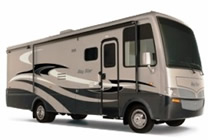
Class A Motorhome
The biggest thing on the lot. A Class A runs roughly 30 to 40 feet long, about 10 feet tall, and somewhere between 13,000 and 30,000 pounds gross vehicle weight, built on a custom chassis or a medium-duty truck chassis. Inside it is one open box, so you can walk from the driver's seat to the back bedroom without climbing around anything. Picture the shape of a highway coach. You get the most living space of any RV, and in exchange you want to think honestly about where you will park it and what it costs to fuel.
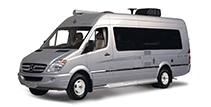
Class B Motorhome
A camper van. A Class B is built inside a factory van body, so it drives and parks close to what you are already used to and it fits in a normal driveway. The trade is floor space. Most sleep two in comfort, which is why they suit couples and solo trips more than families. If you want one vehicle that camps on the weekend and runs errands during the week, this is the category that actually allows it.
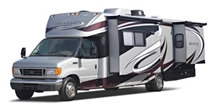
Class C Motorhome
The middle size. A Class C is built on a cutaway van chassis, so you get a van cab up front, a wider box behind it, and usually a bunk over the cab. Figure 20 to 25 feet long, about 10 feet tall, and 10,000 to 12,000 pounds gross vehicle weight. Getting from the cab to the living area means stepping around the engine hump, which is a small annoyance in exchange for something that drives more like a truck than a bus.
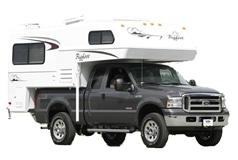
Pickup Truck Mounted Campers
A camper body that loads into the bed of an unmodified pickup. You take the tailgate off, set the camper in, and clamp it down. These are the smallest self-contained option and the most capable once the pavement ends, because you are only as limited as the truck underneath. Taking one off the truck is possible, but it is a job rather than something you do for an afternoon at the campground. We sell truck campers, we do not rent them.
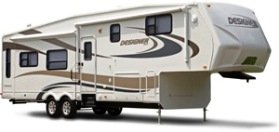
Fifth Wheel Trailers
Fifth wheels are the large towables. The front of the box extends forward over the truck bed and sits on a plate shaped like a wheel, which is where the name comes from. That hitch carries the load over the truck's rear axle instead of behind the bumper, and most people find a fifth wheel tracks straighter and sways less than a travel trailer of similar size. You do need the right truck, with a hitch mounted in the bed and enough payload left over for the pin weight. Pin weight catches more buyers out than any other number, so check it before you fall for a floorplan.
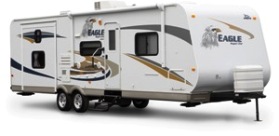
Travel Trailers
The widest range of anything we sell, from small units that amount to a bedroom on wheels up to trailers with nearly the living space of a Class A. Lengths run about 10 to 35 feet. They sit lower than a motorhome, so you get the same interior height with less overall height to think about on tree-lined roads. Anything but the smallest wants a weight distributing hitch and usually sway control, because the whole load rides behind the tow vehicle's rear axle.
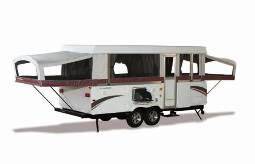
Pop-Up Trailers
The smallest towables. Canvas sides fold down onto a low box, so a pop-up tows and stores much like a small utility trailer, and most mid-size vehicles can pull one without any modification. It is the cheapest way into towing and the easiest to keep at home between trips. We sell pop-ups, we do not rent them.
