 Since 1977

For two kids and two adults, the excitement of traveling together on an adventure is just around the corner. But many wonder how to go about choosing the right RV for your family. That is often a challenge in itself.
That is why we have you covered breaking down the cost range and different classes of RVs to make the decision easier.
Travel Trailer, Class C motorhome, or Class B Camper Van?
The next few paragraphs will outline what RV is best for your family based off of space, cost, if it can be towed or driven, and what layout and features fit the way you travel.
When a travel trailer makes more sense
Travel trailers are designed to have a lot of space, especially because some use bunkhouse floorplans, slide-outs, open kitchens and living rooms. Some family-focused models are designed to sleep 8–10 people, providing enough interior space for kids, guests, and camping gear. They also offer a cost-friendly budget as they range in price starting at $7,900, and top out at $200,000.
Travel trailers are towable, so they require a truck or SUV with the right towing capacity. Motorhomes are a great option if you are looking for something drivable.
The standout family layouts are usually:
Bunkhouse floorplans that separate kid sleeping space from the main bedroom. The 2026 Grand Design Imagine XLS 22BHE is a great option for this floorplan, starting at $57,689. It has a dry weight of 5,698 lbs and sleeps six people.
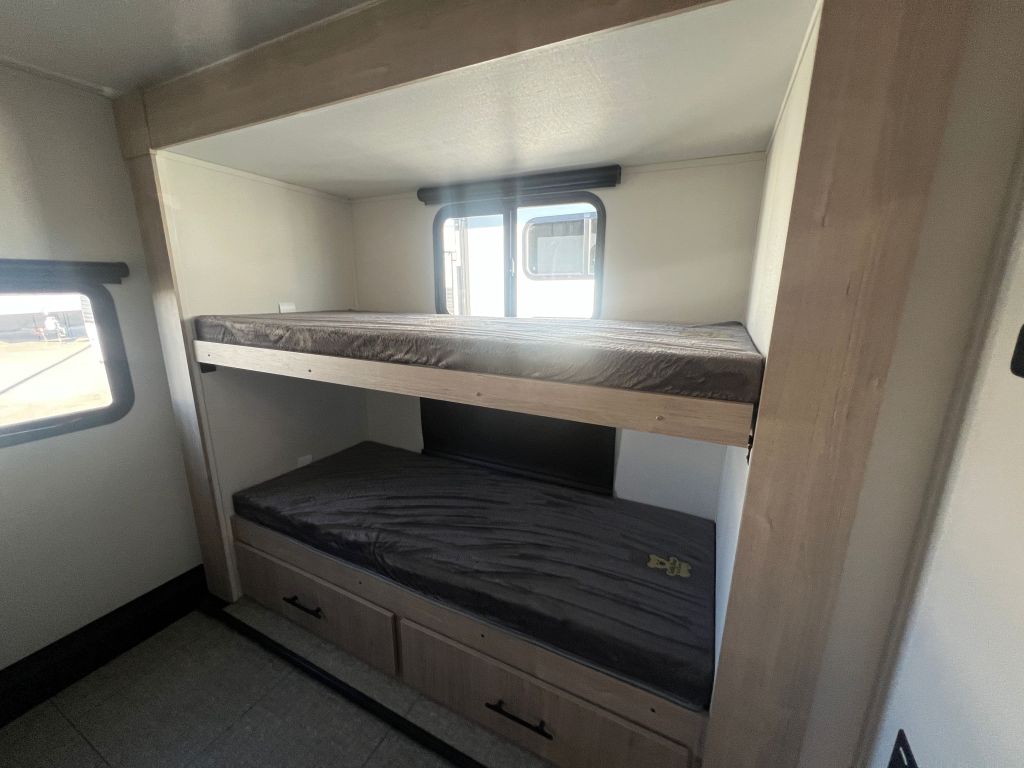
The 2026 Grand Design Imagine XLS 22BHE has a bunkhouse floorplan. PHOTO BY TRAVELAND RV
The 2026 Forest River Rockwood Mini Lite 2509S is another fantastic option for families; this travel trailer starts at $63,986. It sleeps eight people and has a dry weight of 5,499 lbs.
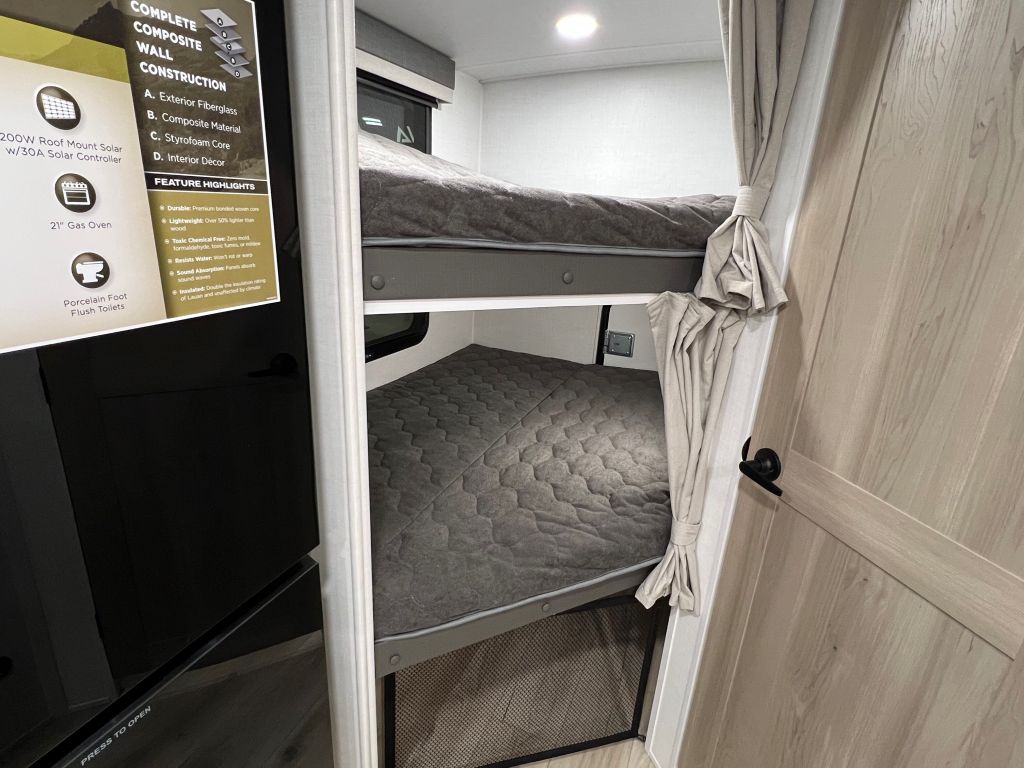
The 2026 Forest River Rockwood Mini Lite 2509S has a bunkhouse style floorplan. PHOTO BY TRAVELAND RV
Rear bunk rooms or double bunks give multiple kids a dedicated zone.
Slide-outs expand the living area for meals, homework, and rainy days.
Open kitchens and larger dinettes are useful for family meals and entertaining.
Travel trailers also have easy-to-clean surfaces, great storage, and a layout that keeps traffic flowing when everyone is inside.
When a Class C motorhome wins
As mentioned previously, A Class C motorhome is a self‑contained, drivable RV (built on a van or cut‑away truck chassis) that is often ideal for a family of four because it balances space, comfort, and is easy to drive. Most Class Cs also sleep 4-6 people typically using a cab-over bunk above the driver, a rear bedroom or bunk area, and a dinette and sofa that converts to a bed. Class C motorhomes range in price from $73,000 to $430,000.
Key features of Class C motorhomes:
All‑in‑one living space. Full kitchen, bathroom with shower, fridge, and climate control in one unit, protecting you from weather while traveling.
Easier to drive than a Class A. Shorter length (often 24–32 ft) and van‑based handling make parking, fueling, and city driving more manageable for families.
Family‑friendly features. Seat belts for passengers, large exterior storage, awnings, and entertainment options for rainy days.
Class C floorplans vary, but these are the most common layouts that work well for four people:
Cab‑over bunk + rear bedroom.
Parents in a rear bedroom; kids in the cab‑over bunk and/or dinette bed.
Very popular for families who want a private main bedroom.
The 2025 Jayco Redhawk SE 22T is a great example of an RV that has a cab-over bunk and rear bedroom. It starts at $108,888, and sleeps up to six people. It also has a U‑shaped 48‑in. dinette bench that converts to an additional sleeping area.

The 2025 Jayco Redhawk SE 22T is a great example of an RV that has a cab-over bunk and rear bedroom. PHOTO BY TRAVELAND RV
Murphy bed + dinette/sofa beds.
Bed folds up during the day to create more living space; extra beds from dinette/sofa.
Maximizes daytime room while still sleeping four at night
The 2024 Entegra Coach Qwest SE 24R has a murphy queen bed that folds up during the day to create more space for the entire family. It starts at $164,888 and sleeps six people.

The 2024 Entegra Coach Qwest SE 24R has a murphy queen bed that folds up during the day to create more space for the entire family. PHOTO BY TRAVELAND RV
Where Class B camper vans fit in
A camper van (Class B) appeals to a family of four because it’s compact, easy to drive, and still provides a true “home on wheels” for road trips and weekend camping. Camper vans that sleep four people range anywhere from $150,000 to $300,000.
Key features of a camper van:
Easy to drive and park. Built on a standard van chassis (Sprinter, Transit, ProMaster), it feels much more like a daily driver than a large motorhome.
Flexible, family‑friendly layouts. Modern family vans are designed to seat four with seatbelts and sleep four using combinations of fixed beds, lift beds, pop‑tops, and convertible dinettes.
Lower running costs than big RVs. Better fuel economy, smaller tires, and simpler maintenance compared to Class C or travel trailers.
Two floorplan layouts:
Sleeping:
Rear two-piece folding platform bed
Great for optimizing space and for extra storage.
The 2025 Airstream Rangeline Base is a perfect unit for two adults and two kids as it sleeps up to four people. It is also convenient as you can park it in most conventional parking spots and there is no need to worry about towing anything. The unit starts at $179,888.
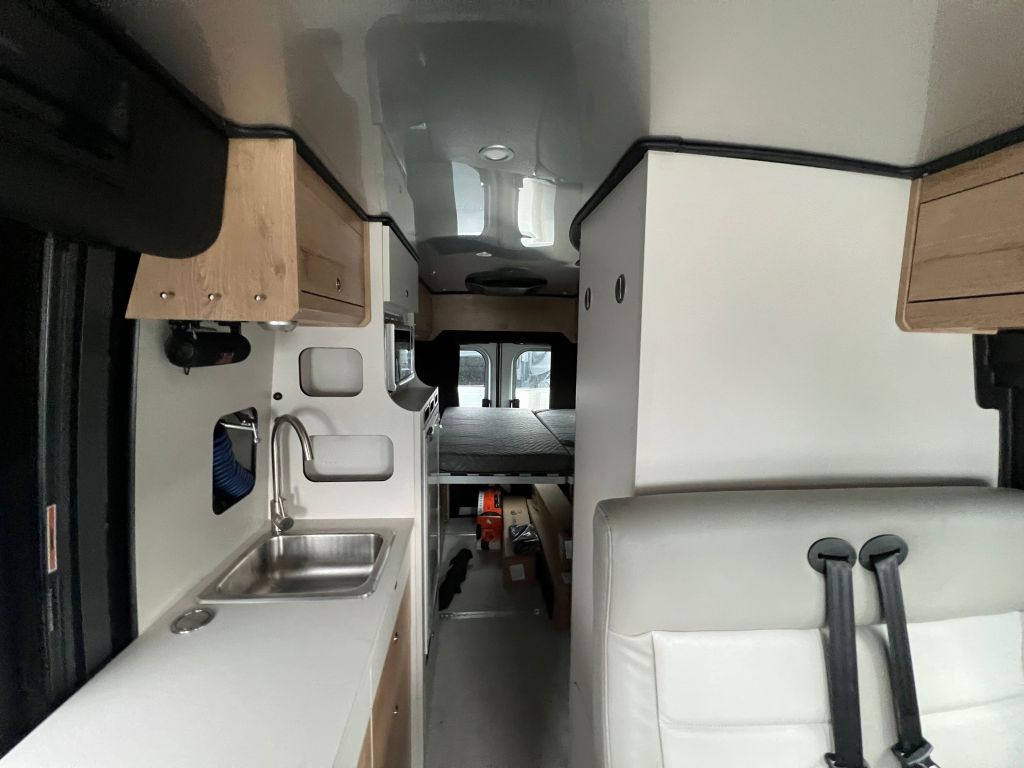
The 2025 Airstream Rangeline Base is a perfect unit for two adults and two kids as it sleeps up to four people. PHOTO BY TRAVELAND RV
Pop‑top roof bed or power lift bed above the seating area for kids.
The 2027 Grand Design Lineage Series VT LVT1 Pop Top has a flip-up bed in the rear and a pop‑top bed above the main cabin area. It can sleep up to four people and starts at $239,997.
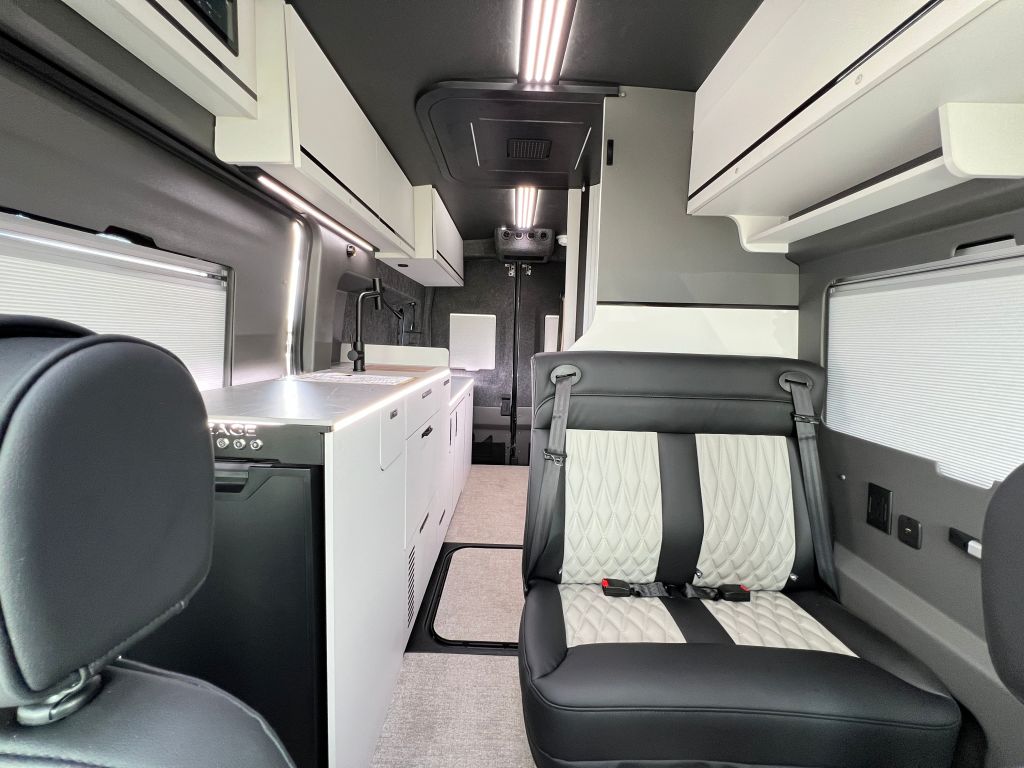
The 2027 Grand Design Lineage Series VT LVT1 Pop Top has a flip-up bed in the rear and a pop‑top bed above the main cabin area.
Kitchen & living:
Side galley kitchen along one wall, dinette/table that can be used for meals, games, or homework.
The right RV is the one that fits how your family actually travels
There’s no single “best” RV for every family of four. The right unit is the one that matches your tow vehicle (or eliminates the need for one), fits the length of your typical trips, and makes setup and teardown simple enough that departure mornings don’t become a stressful production.
A walk-through almost always shifts what you think you want—usually for the better. That’s when finding the best RV for a family of four stops feeling like an abstract search and starts feeling like a real, confident decision.
