 Since 1977

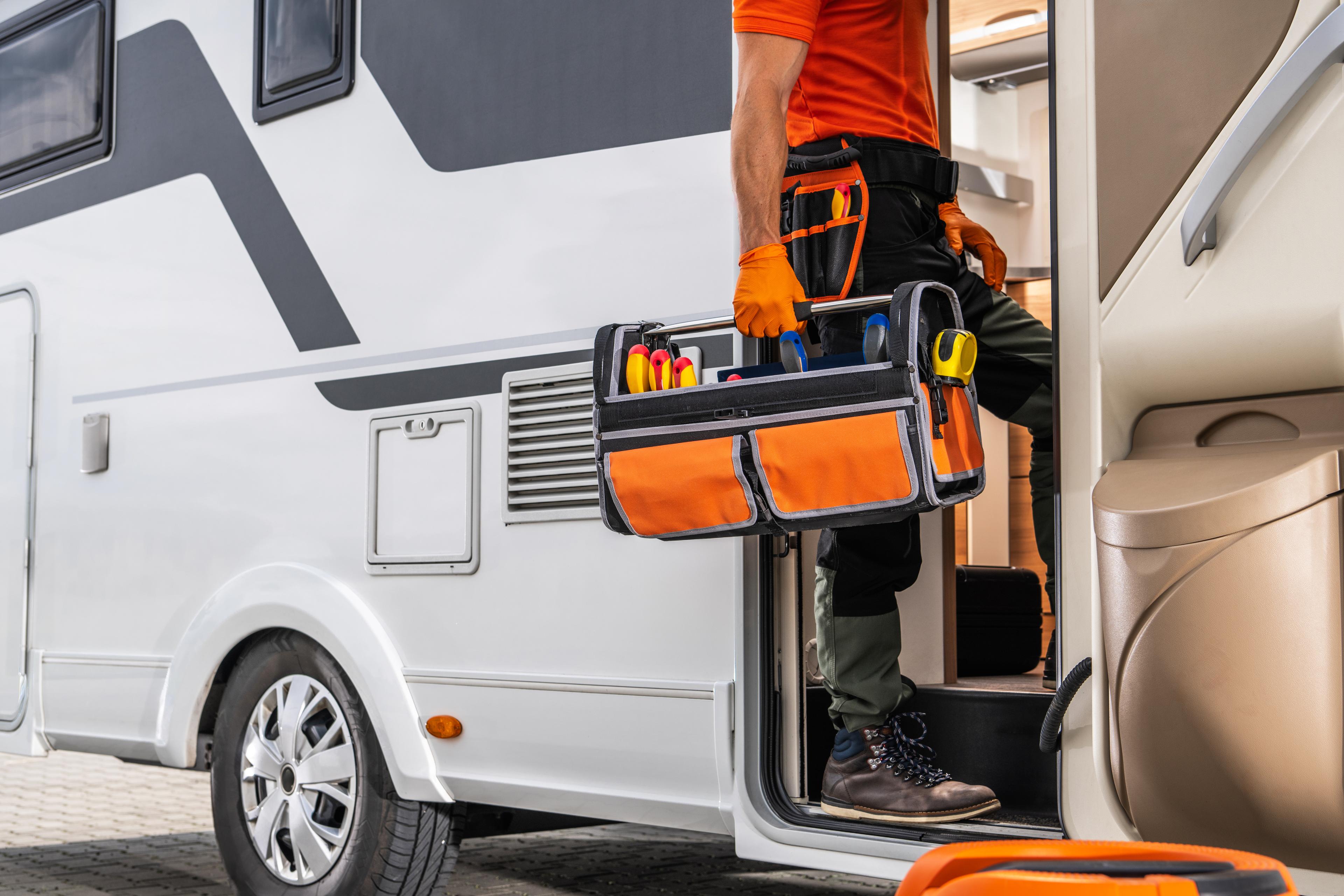
A little annual maintenance can save you from big, expensive surprises later. A small roof leak, worn wheel bearings, or an aging propane hose can turn a fun camping trip into an unexpected repair stop. The good news? Most annual RV maintenance is straightforward when you follow a simple schedule.
Whether you own a travel trailer, fifth wheel, or motorhome, a yearly inspection helps protect your investment, keeps your family safer, and makes every trip more enjoyable. Here’s a practical checklist to keep your RV ready for the road.
Start with the roof and seals

Water damage is one of the most expensive RV problems, and it often starts small. A tiny gap around a vent, skylight, air conditioner, or roof seam can let moisture in for months before you notice a stain on the ceiling.
Inspect your roof at least twice a year, and ideally in spring and fall. Also check it before and after long trips, winter storage, or any severe weather.
Walk the roof carefully and check around vents, skylights, the air conditioner, antenna mounts, and ladder attachments. Pay close attention to the front and rear cap seams, where the roof meets the sidewalls. Look for cracked, lifting, shrinking, or missing sealant.
Use self-leveling lap sealant for horizontal roof seams and non-sag sealant for vertical joints. Clean the area first, let it dry completely, and apply a continuous bead of sealant with no gaps. If you find soft flooring, or signs of water inside the RV, have a technician inspect it before sealing over the problem. Covering wet or damaged material can trap moisture and make the damage worse.
Check propane and safety devices

Your propane system should be inspected every year. A qualified RV technician can perform a leak-down test, check the regulator, and inspect hoses, fittings, and valves for cracks, corrosion, or wear.
Also check the dates on your safety detectors. LP gas and carbon monoxide detectors usually need replacement every 5 to 7 years from the manufacture date, not necessarily from the date you bought them.
Before your first trip, run the furnace, water heater, refrigerator, and stovetop. Make sure everything lights properly, heats or cools as expected, and shuts off correctly. Catching an issue at home is much easier than dealing with it at a campsite hours from the nearest service centre.
Look after tires, brakes, and bearings

Your RV’s running gear works hard, so it needs yearly attention too.
Wheel bearings: Repack them every 12 months or every 16,000 to 19,000 km, whichever comes first.
Tires: Check pressure when the tires are cold, inspect tread depth, and look for cracks. Even tires with good tread may need replacing after 5–7 years because sunlight and weather break down the rubber over time.
Brakes: Have the brake drums and electric brake magnets inspected annually. It’s convenient to do this at the same time as a bearing service, since the wheels are already off.
Test batteries and comfort systems

A battery can show a decent voltage but still struggle when it needs to power lights, slides, furnace fans, or other equipment. Have it load tested each year, clean the terminals, and check cables for corrosion or damage. A healthy fully charged 12-volt lead-acid battery should read about 12.6–12.7 volts at rest.
For the air conditioner, clean or replace the filters and have the coils checked. During heavy summer use, clean the filters more often to keep airflow strong and help the unit run efficiently.
For the water heater, drain and flush the tank to remove sediment. If your model has an anode rod, inspect it and replace it when it is heavily worn. Test the pressure relief valve as well.
The furnace should also be inspected yearly. Because a cracked heat exchanger can create a carbon monoxide risk, this is best left to a certified technician. Book a service appointment with Traveland RV here.
Don’t forget the slide-outs
Slide-outs need regular care to keep moving smoothly and sealing properly. Lubricate the mechanism with the correct product for your slide type, clean the rollers, and inspect the seals.
With the slide extended, look along the entire seal for cracks, gaps, or areas that no longer make solid contact. Even a small gap can let water inside, so address seal issues promptly.
DIY or book a service?

Some tasks are perfect for owners:
Roof inspections and minor sealant repairs
Tire pressure checks
Battery terminal cleaning
Water heater flushing
Slide-out seal inspections
Testing smoke, CO, and LP detectors
Other jobs are best handled by a certified RV technician:
Propane pressure testing
Wheel bearing repacking
Brake inspection and adjustment
Furnace and heat exchanger checks
Air conditioner service
Roof repairs when water damage is suspected
The bottom line
A yearly RV service is one of the best ways to protect your investment and avoid roadside problems. Work from the roof down: check seals, safety systems, propane, appliances, tires, brakes, batteries, HVAC, and slide-outs.
Ready to get your RV season-ready? Book an annual service with the experts at Traveland RV and let our certified technicians check your RV from roof to axle.
